
"total production"
10000 article(s) found

There are both founder's coffee and nursery 2 kilometers away from the factory.
On the banks of Shenshan Lake, the project of Shenshan Lake Business District, which can be called the most beautiful valley of wisdom, started yesterday. General Life Valley Jinkou New City Shenshan Lake Business District (Phase I) project is built by CITIC Engineering Design and Construction Co., Ltd. The project is located on the west side of Shenshan Lake Park and on the north of Shenshan Hunan Road. It covers a total area of 45065 square meters and a total construction area of 81821 square meters.
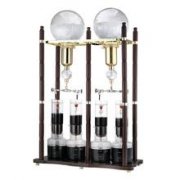
Boutique coffee pot introduction ice drop coffee pot total coffee
Low temperature extraction of coffee essence, a completely different taste feeling! Ice drop coffee is said to have been invented by Dutch immigrants on the island of Java. The structure of the ice drop pot is simple, including the upper pot, the middle pot and the lower pot. The ice in the upper pot melts into a drop of water into the middle pot containing coffee powder, and the iced coffee extracted from the lower pot is picked up. The production process is very ornamental, and it is a coffee extraction method that can best reflect the original taste of coffee.

The main reason for drinking coffee while it is hot is what kind of fine coffee is introduced.
Coffee is Nicaragua's main export. According to the president of the Nicaraguan Coffee Farmers' Federation, due to the poor harvest of coffee in Nicaragua's Pacific region, the country's total coffee production in 1998 may be 12% lower than that in 1997. In the coffee year of 1997 and 1998, Nicaragua harvested 1.422 million bags of coffee (each bag of 46kg), which has been producing 1% of coffee in the past 14 years.
Post-Valley Coffee Debt Crisis is How to Relieve Total Debt of $2 Billion
When it comes to the timely support of banks for enterprises to handle new loans and old loans, Xiong Xiangren's eyes are red: very moved! I didn't expect banks to be so bold and free to support enterprise development so quickly. At least within a year do not have to rack their brains to find a way to solve the problem of turning around funds, enterprises do not have to bear the high financial costs of private loans forward, finally can embark on the track of benign development. Xiong

Introduction of Brazilian Coffee single Bean Flavor description Variety planting Development History of producing area treatment Manor
For the exchange of professional baristas, please pay attention to the coffee workshop (Wechat official account cafe_style). Brazil's coffee industry two large bags of coffee beans on coffee plantations in the state of Minas Gerais, Brazil. Taken in Sao Paulo, Brazil's coffee industry accounts for about 1/3 of the world's total output and is currently the world's largest coffee producer. Coffee cultivation in Brazil

Nicaraguan Coffee Manor Tianji Manor introduces boutique coffee beans
Coffee is Nicaragua's main export. According to the president of the Nicaraguan Coffee Farmers' Federation, due to the poor harvest of coffee in Nicaragua's Pacific region, the country's total coffee production in 1998 may be 12% lower than that in 1997. In the coffee year of 1997 and 1998, Nicaragua harvested 1.422 million bags of coffee (each bag of 46kg), which has been producing 1% of coffee in the past 14 years.

The Green Dream of Coffee in Yunnan Coffee planting Environment in Yunnan
Abstract: introduction: outshining others is not spring. In order to make great progress in Yunnan coffee industry, intensive processing is the only way, and in the face of competition from international coffee giants, Yunnan coffee needs the effect of industrial clusters more. And this will be the situation that zhengfu likes to hear and see. In 2012, Yunnan coffee output is expected to be 60,000 tons, accounting for 98% of the national coffee output, accounting for the world.

What is arusha coffee?| How does the arusha blue mountain coffee variety taste?
Professional coffee knowledge exchange More coffee bean information, please pay attention to coffee workshop (Weixin Official Accounts cafe_style) First of all, Arabica series in addition to Bourbon and Kent main varieties, there are Tibika, Blue Mountain, Arusha. And then there's Robusta. 450,000 smallholder farmers in productive farming systems depend on coffee (locally known as kahawa) for their livelihoods. These five hectare plots

Coffee bean sack ingenious use of raw bean information detailed explanation of Manning coffee bean sack transformation into an one-shoulder bag
After drinking so much freshly roasted coffee, you must have received a lot of well-sealed coffee bean bags. But have you ever seen a sack with raw coffee beans? Don't underestimate these jute bags, they are by far the oldest coffee packaging material. According to the Food and Agriculture Organization of the United Nations, these sacks are 100% biodegradable, recyclable and very environmentally friendly. he
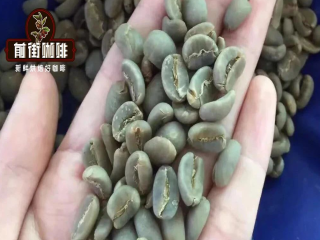
The type of coffee and its taste coffee variety Daquan coffee beans have the best flavor
According to biology, coffee varieties are divided into three major varieties: Arabica, Robusta, and Liberika. Arabica is one of the best flavor of coffee beans, it is currently recognized as the representative of boutique coffee. Arabica coffee accounts for 70% of the total output of economically grown coffee in the world, which is us.

Brazilian Santos Coffee Science Popularization knowledge of the characteristics of Brazilian Santos Coffee
Professional coffee knowledge exchange more coffee bean information please follow the coffee workshop (Wechat official account cafe_style) Brazil Santos coffee varieties from South America Brazil is the world's number one coffee producer, accounting for about 30% of the world's total production. Almost all Santos coffee is produced in southeastern Brazil and is the best coffee in Brazil. Raw bean granules range from medium to large, but without green

An introduction to the characteristics of the pure Ethiopian Sidamasha Chiso coffee flavor manor.
Coffee is Ethiopia's main economic crop and the country's largest crop export and important industry. It accounts for 60% of Ethiopia's total export value and supports many small farms, as well as sugar, bananas and cotton. It is also Ethiopia's largest and important commodity export crop after oil, and it is also the largest export of Elaraby in Africa, in 1997.

Dl Brazilian coffee how to tell the true from the fake? what does the imported Brazilian coffee beans have to do with China?
For more information on coffee beans, please follow the coffee workshop (Wechat official account cafe_style) in 1727, coffee was first brought to the state of Par from French Guiana (Guiana) by Portuguese Lieutenant Francesco de Melo Pachta (Francisco de Melo Palheta). In 1770, coffee spread to Rio de Janeiro. 3 1779
Coe cup meter European Chinese version explains what COE SCAA the Coffee Association has
The cup testing system introduced by BGT and Osher Coffee Alumni Association in the past two years all use the CoE competition mode. At present, the fine bean competition in various countries uses either CoE or SCAA mode, up to 9 major coffee producing countries all use the Coe cup as the national competition mode, so we decided to promote the CoE cup testing system in Taiwan. The purpose of BGT is to let barista [know boutique coffee] and use his essence.

What is suitable for Brazilian Santos coffee? can Brazilian Santos be made in Italian style?
Professional coffee knowledge exchange more coffee bean information please follow the coffee workshop (Wechat official account cafe_style) Brazil Santos varieties from South America Brazil is the world's number one coffee producer, accounting for about 30% of the world's total production. Almost all Santos coffee is produced in southeastern Brazil and is the best coffee in Brazil. Raw bean granules range from medium to large, but without green

Ethiopian Coffee Manor Flavor description Taste characteristics introduction of varieties in Grinding area
Large-scale coffee-growing villages account for about 35% of the country's total coffee production. These coffee farms, which use a multi-tier coffee planting system, are carefully cared for. Coffee farmers do not use chemical fertilizers, but use fallen leaves and animal and plant debris to increase soil nutrition. In addition to coffee, farmers also frequently grow non-coffee crops. It even accounts for the total amount of coffee in the country.

Raw beans of Ethiopian Sidamo Coffee treated with Water washing G2 Grade imported Coffee unbaked beans
Today, there are still a large number of wild Arabica coffee trees growing in many parts of Ethiopia, averaging between 4200 and 6800 feet above sea level. Now there is a trend of small cultivation, generally planting banana trees for shade at the same time, but due to lack of agricultural technology, herbicides and pesticides are less used. Coffee is Ethiopia's main economic crop and the largest in the country.
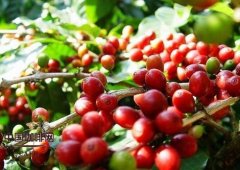
The Brazilian Hirado Prairie is one of the famous coffee producing places in Brazil, Alimentos Manor.
The Brazilian Hirado Prairie is one of the famous coffee producing places in Brazil, with an area of 120W square kilometers, accounting for 22% of the national area of Brazil. Alimentos Farm, founded in 1974, is located in Brazil's Hirado prairie at an altitude of about 900 to 1000m. It has undulating foothills, rich landforms, obvious dry and wet seasons, large temperature difference between day and night, and obvious microclimate, so it is suitable for planting Ca.
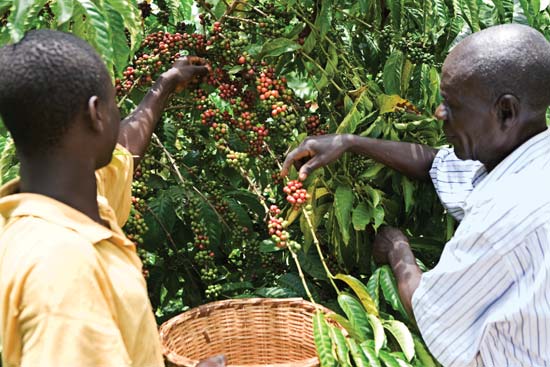
Uganda's coffee exports are not greatly affected by COVID-19. Coffee exports increased by 22% in 2020.
Professional coffee knowledge exchange more coffee bean information please follow the coffee workshop (Wechat official account cafe_style) Uganda Coffee Development Authority (UCDA) report released in December 2020, according to the data, Uganda exported 5491,2525 bags (60 kg each) of coffee in 2020, valued at US $515.94 million. In 2019, Uganda's coffee exports totaled 451, 9563 bags, worth 4.

A comprehensive introduction of Brazilian coffee beans Central American region
Brazils to distinguish it from Milds coffee. The vast majority of Brazilian coffee is unwashed and sun-dried and is classified according to the name of the state of origin and port of transport. Brazil has 21 states and 17 states produce coffee, but four of them produce the largest, accounting for 98% of Brazil's total output. They are: Parana, SaoPaulo and Milas.